

The Science of Vaastu: Understanding Light, Airflow and Spatial Planning
Research shows that access to natural light, fresh air, and well-planned spaces can significantly influence human well-being, productivity, sleep quality, and overall comfort. Studies of the built environment further indicate that people spend nearly 90% of their lives indoors, making the quality of residential design more important than ever before. Long before architects began discussing daylight optimisation, passive cooling, thermal comfort, and wellness-led design, traditional Indian planning systems had already recognised the importance of these factors. Among them, Vaastu stands out as one of the most enduring. Viewed through a contemporary lens, Vaastu reveals an interesting perspective. Beyond its cultural significance lies a framework that places considerable emphasis on orientation, natural light, air movement, spatial balance, and the relationship between buildings and their environment. Many of these principles align closely with concepts that architects, urban planners, and environmental designers continue to prioritise today. As homebuyers increasingly seek healthier and more comfortable living environments, the relationship between Vaastu and modern building science has become a subject of growing interest.
I. Light: One of the Most Powerful Design Elements
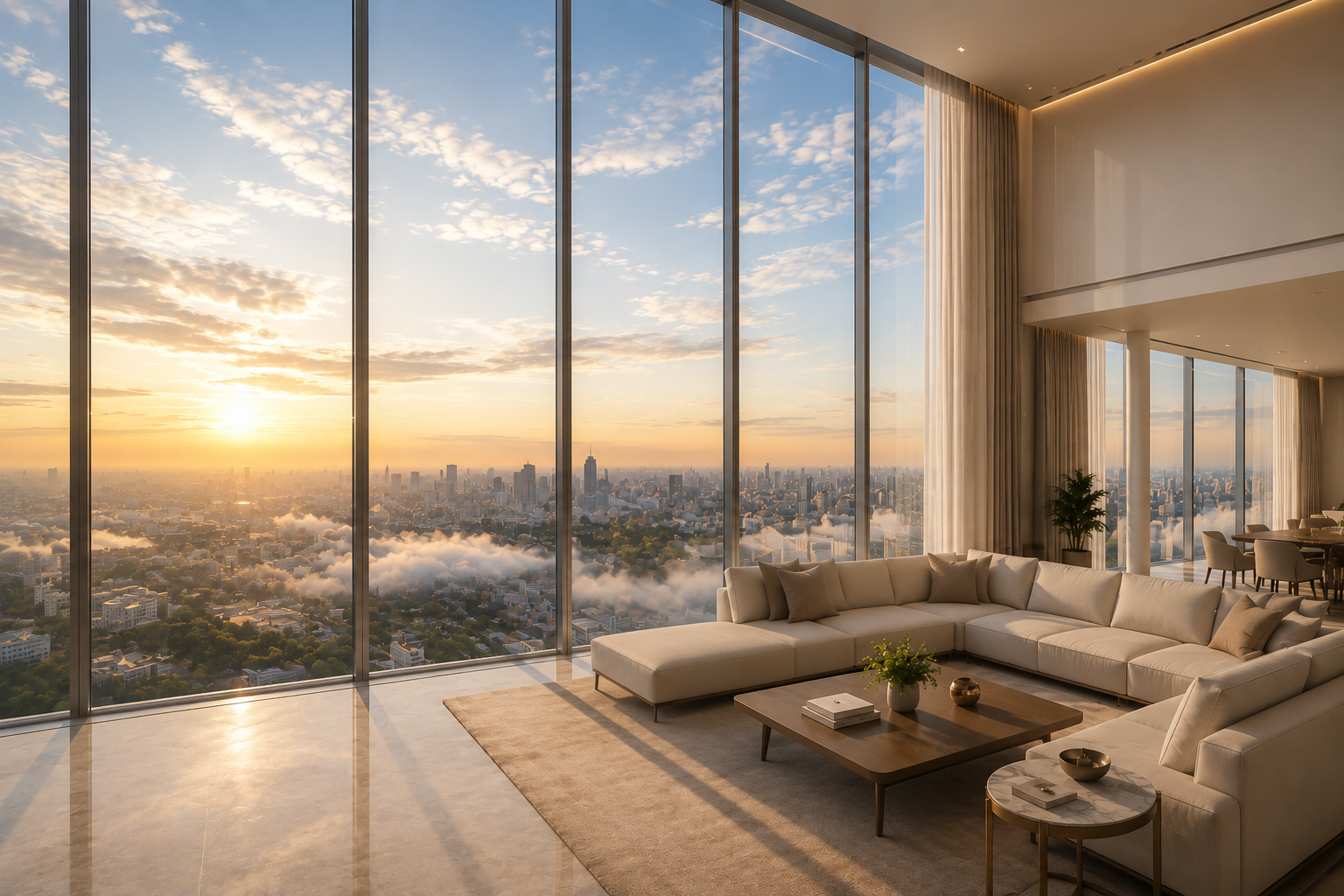
Natural light influences far more than aesthetics. Research has consistently linked daylight exposure to improved mood, healthier sleep cycles, increased productivity, and enhanced overall well-being. Morning sunlight, in particular, plays an important role in regulating circadian rhythms, the body’s natural clock that influences energy levels, alertness, and rest patterns throughout the day. Studies have also shown that daylight-rich environments can reduce dependence on artificial lighting while contributing to more comfortable indoor spaces.
Interestingly, Vaastu places significant importance on eastern and northern orientations. Traditionally, these directions are associated with balanced daylight conditions and comfortable solar exposure throughout the day. While ancient planners may not have used modern scientific terminology, the principle remains remarkably aligned with contemporary understanding: homes that receive balanced natural light often provide a healthier and more enjoyable living environment. This growing awareness is one of the reasons many homebuyers evaluating Luxury Apartments in Bangalore, Premium Apartments in Bangalore, and New Apartments in Bangalore increasingly prioritise daylight access as an important design consideration.
II. Airflow: The Invisible Contributor to Comfort
If natural light shapes visual comfort, airflow plays an equally important role in shaping the quality of indoor living. Before mechanical cooling systems became commonplace, homes relied on the movement of fresh air to maintain comfortable indoor conditions. Vaastu planning encourages layouts that support natural air circulation, openness, and unobstructed movement throughout a home. Modern architecture refers to this approach as passive design.
The benefits are widely recognised:
• Improved indoor air quality & energy efficiency
• Better thermal comfort
• Reduced heat accumulation
• Lower dependence on artificial cooling systems
In rapidly growing urban environments, healthy airflow has become increasingly important. Buildings designed around effective air movement often provide a more comfortable indoor experience while supporting sustainable living practices. As wellness and sustainability continue gaining importance in residential design, these principles remain highly relevant.
III. Spatial Planning Beyond Direction
One of the most common misconceptions about Vaastu is that it focuses exclusively on directions. In reality, spatial planning forms a significant part of the discipline. Traditional Vaastu principles recommend organising living spaces based on sunlight patterns, air movement, functionality, and daily usage. Kitchens, living areas, bedrooms, and open spaces are positioned to optimise comfort and efficiency throughout the day.
Modern architects evaluate many of these same considerations:
• Sun movement
• Airflow patterns
• Functional relationships between spaces
• Access to natural light
• Indoor-outdoor connectivity
The objective remains remarkably similar: creating homes that function efficiently while enhancing everyday living experiences. At BHADRA Group, this understanding continues to influence residential planning across Codename PeakLife, Codename BasavanaGudi, and Codename Andree Road. Across these developments, 100% Vaastu planning is integrated with contemporary architectural design, creating homes that balance orientation, openness, natural light, healthy airflow, and functionality. This approach reflects a growing preference for Vastu Compliant Homes that combine traditional planning wisdom with the expectations of modern urban living.
IV. Climate-Responsive Design and Vaastu
One of the lesser-discussed aspects of Vaastu is its relationship with climate-responsive design. For centuries, Indian architecture evolved around local climatic conditions. Building orientation, placement of openings, room layouts, and open spaces were carefully planned to maximize comfort while responding to sunlight, wind movement, and seasonal variations. Today, architects describe these strategies as passive environmental design.
Many Vaastu principles support:
• Reduced solar heat gain
• Improved natural air circulation
• Better daylight penetration
• Enhanced thermal comfort
• Greater energy efficiency
As sustainability becomes an increasingly important priority, these principles are finding renewed relevance within contemporary residential planning. This is particularly visible in thoughtfully designed developments such as Codename PeakLife Kengeri, Codename BasavanaGudi, and Codename Andree Road, where planning strategies seek to maximise natural advantages while creating comfortable living environments.
V. Wellness and the Modern Home
The global wellness movement has significantly influenced the way homes are designed today.
Homebuyers increasingly prioritise:
• Daylight-rich interiors
• Fresh and breathable living spaces
• Open and functional layouts
• Greater connection to nature
• Long-term comfort and liveability
The growth of remote and hybrid working models has further amplified these priorities. Homes today function as living spaces, workplaces, wellness environments, and social spaces simultaneously. Many of these evolving expectations mirror concepts that have existed within Vaastu for centuries. This alignment explains why Vaastu continues to resonate across generations. Increasingly, it is being viewed as a framework that supports climate-responsive, human-centric, and wellness-oriented design. Whether one is evaluating Apartments in Kengeri Bangalore, Apartments in BasavanaGudi, Apartments in Shanti Nagar, or other premium residential developments, factors such as natural light, airflow, comfort, and spatial efficiency are becoming central to decision-making.
Ancient Wisdom, Contemporary Relevance
The continued relevance of Vaastu may ultimately lie in its practical foundations. At its core, Vaastu encourages homes that work in harmony with their surroundings, maximise natural resources, and create comfortable living environments. These objectives align closely with the aspirations of contemporary residential design. As conversations around wellness, sustainability, and liveability continue to evolve, the relationship between Vaastu and modern building science becomes increasingly compelling. Perhaps the most enduring lesson from Vaastu is also the simplest: better homes begin with better planning. Access to natural light, healthy airflow, balanced spatial planning, and thoughtful design remain central to creating homes that support comfort, wellness, and quality of living. For this reason, demand for Vastu Compliant Apartments in Bangalore, Luxury Flats in Bangalore, and thoughtfully planned residential communities continues to strengthen. As residential design evolves, the principles of Vaastu remain closely aligned with a future where wellness, sustainability, and quality of living increasingly define the homes people choose.